

1. The Practitioner Matters
First off, consider who’s administering your treatment. Their experience and skill level are crucial. Are they using genuine products from reputable suppliers? It’s reasonable to ask to see the product before the procedure.
2. Dosage is Key
Next, let’s discuss the dosage. Botulinum toxin is dose-dependent: higher doses typically yield stronger and longer-lasting results. However, if you prefer a more natural look, you may have to accept a shorter duration of effects. Sometimes too, you may just not have the kind of anatomy or skin quality that lends itself to tolerating a higher dose without looking a bit strange or risking complications like drooping of the eyebrows or eyelids.
3. Consistency is Crucial
Another factor is how regularly you’re getting treatments. If you’re inconsistent, maybe skipping six months between sessions, you won’t achieve optimal results. For best outcomes, aim for treatments about three times a year. Consistency helps you find that sweet spot where you get the best results and reduces your risk of complications.
4. Beyond Botox
It’s essential not to rely solely on toxin for your aesthetic goals. Your skin needs care too. High expectations for what a single treatment can achieve can lead to disappointment. Toxin can reduce muscle activity for several months, but it doesn’t stop the aging process. Remember, we all age differently, and results can vary from person to person. Visible ageing is also due to other factors like UV damage, skin health and quality, volume loss, bone resorption, fat pad displacement, and many other things.
5. Age and Changes Over Time
Time affects our skin and facial structure. As we age, changes like loss of collagen and sun damage can alter how toxin works for you. If you’ve noticed that your results were better a few years ago, it’s likely due to the natural aging process. It’s very rare that the doctor you’ve been seeing for years has all of a sudden lost their skill.
6. Understanding Resistance
You might wonder about developing resistance to toxin. While it’s rare, it can happen, especially if you’ve received frequent treatments over time, like within 12 weeks of each other. During the COVID-19 pandemic, many people noticed their toxin didn’t last as long, likely due to irregular treatment schedules, heightened stress levels, and possibly COVID infection. Anecdotally, we do notice in clinic that when your immune system is ramped up (with a viral infection, for example), toxin may not always give you the same longevity as usual.
7. Tailored Treatment
When you first try toxin, your injector will likely start with a conservative dose to avoid any undesirable effects. This is especially important for older patients, as the balance becomes more delicate. Your injector should consider your unique facial movements, skin quality, and age to determine the right dosage. The dosage that worked a few years ago might have you looking weird today.
8. Be Patient and Realistic
It typically takes a few days for toxin to kick in, with results peaking around two weeks. However, don’t expect it to be a miracle fix. A single treatment won’t dramatically change your appearance, and results will gradually fade. For the best outcomes, consider integrating quality skincare into your routine alongside your anti-wrinkle treatments.

Conclusion
If you’ve had inconsistent experiences, take a moment to reflect on your treatment history. Consider factors like dosage, frequency, and your injector’s expertise. It’s a complex but fascinating process, and patience is vital. Seek out a qualified injector who uses genuine products and has a solid understanding of your individual needs. Sometimes it is as simple as someone not treating you appropriately, but that’s usually much lower down the list of possible reasons, and the risk is greatly reduced when you choose someone who knows what they’re doing. Never be afraid to ask anyone wielding a needle near your face about their qualifications and experience.
More Tips from the Blog

Let’s Chat Rosacea
Rosacea Rosacea - if you’ve got it, you know the struggle. Redness, flushing, spots that look like acne but definitely aren’t, stinging skin, even gritty-feeling eyes. And in some advanced cases,...

Let’s Talk Menopause — What’s Actually Going On and Why It Matters
Menopause Menopause isn’t just the end of your periods. It’s a major life transition, and a great time to look after you. So What Is Menopause? Menopause happens when your ovaries stop producing...

Thinking About Injectables but Feeling Nervous? You’re Not Alone
Injectables Lately, you might have been thinking about trying injectables. Maybe smoothing a few lines, refreshing tired eyes, or adding a little volume. But if you’re anything like me when I first...

Why Are Peptides Vital in Our Skincare Routine?
Why Are Peptides Vital in Our Skincare Routine? Peptides are short chains of amino acids which are the building blocks of proteins. In skincare, peptides act as messengers that signal your skin to...
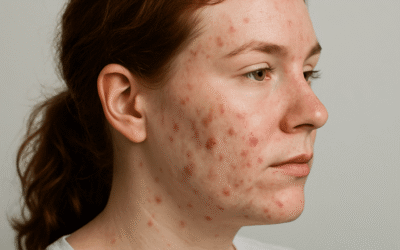
Tips for Managing Acne
Managing Acne Acne isn’t just a teenage problem. Many people, especially women, experience breakouts well into their 30s, 40s, and even during menopause. What Causes Acne? Acne forms when pores get...

Clearing the Bumps: Skincare Tips for Beating Pregnancy Acne
Pregnancy Acne & Skincare Hormonal fluctuations during pregnancy can lead to flare-ups of skin conditions like acne, rosacea, pigmentation, and periorificial dermatitis or even cause them to...