
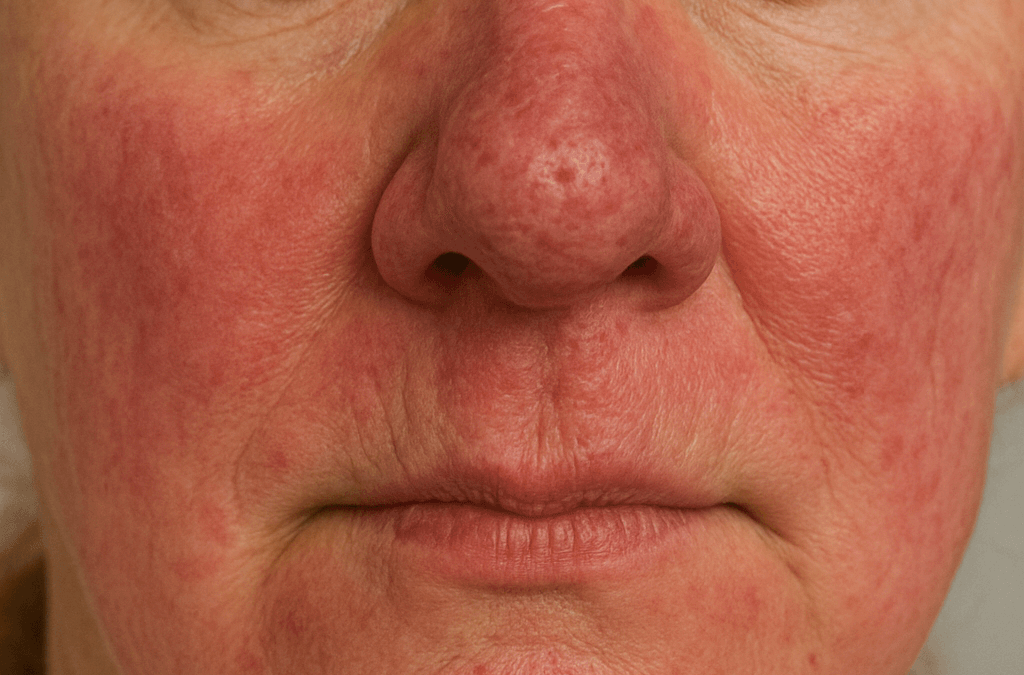
Rosacea
Rosacea – if you’ve got it, you know the struggle. Redness, flushing, spots that look like acne but definitely aren’t, stinging skin, even gritty-feeling eyes. And in some advanced cases, it can cause the nose to thicken. The earlier you catch and treat it, the better, otherwise that redness can become permanent.
It’s super common in Irish skin (some people call it “The Curse of the Celts”), and yes, it often runs in families. One of the culprits? A teeny tiny skin mite called demodex. We all have them on our skin, but people with rosacea tend to have more and their immune systems really don’t like them.
It’s often confused with acne but the treatments are different, so getting a proper diagnosis is key.
So, what helps?
First off: avoid your triggers. The big ones? Spicy food, alcohol, hot drinks (yes, coffee, sorry), and heat (think showers, saunas, sunny days).
Over-the-counter, a few things can calm things down:
- Sulfur: Great for calming inflammation.
- Azelaic Acid & Tranexamic Acid
- Gentle Cleanser: Don’t strip your skin or you’ll go even pinker
- Green-tinted Primer: Helps disguise the redness.
- Supplements: Zinc, omega-3s, and magnesium may support skin health from the inside out.
Prescription Options
If your rosacea’s a bit more stubborn, your doctor might suggest:
- Finacea or Skinoren: Prescription-strength azelaic acid.
- Soolantra: A topical treatment with ivermectin that targets inflammation (and those mites).
- Antibiotics: Sometimes a short course can help during flares.
- Brimonidine or oxymetazoline: Gels that reduce redness fast.
- Laser: Great for treating visible blood vessels (telangiectasia).
- Roaccutane: Used for severe cases.
- Surgery: Rarely needed, but helpful for rhinophyma.
Redness isn’t something you just have to put up with. With the right plan, your skin can calm down — and you don’t have to give up every glass of wine or coffee to get there.
Let me know if you want a personalised plan and book in for a skin consultation.
More Tips from the Blog
Can Too Much Anti-Wrinkle Treatment Make You Look Older?
Why treating the whole face, rather than just the wrinkles and lines, matters Anti-wrinkle injections are one of the most popular aesthetic treatments for a reason. When used thoughtfully,...

Introducing Juläine: Skin Rejuvenation That Works With Your Skin
Not everyone wants anti-wrinkle injections or dermal fillers. Many people simply want healthier, firmer skin that still looks like them. They want to age well, not look different. Juläine is a new...

Why Your Botulinum Toxin Anti-Wrinkle Results Might Not Last as Long as You’d Like
1. The Practitioner Matters First off, consider who’s administering your treatment. Their experience and skill level are crucial. Are they using genuine products from reputable suppliers? It's...

Planning Skin and Injectable Treatments for a Special Occasion: What to Do and When
Major life and family events come with unique pressures, including the worry about photographs and wanting to look like the best version of yourself. I'd love to tell you to just not stress about...

Postpartum Hair and Skin Changes: How We Can Help
Hair loss and skin changes after pregnancy are extremely common. Hormonal shifts, stress, sleep deprivation, and nutritional changes all affect how your hair and skin behave in the months after...

Menopause and weight gain: why it happens and why it isn’t your fault
Weight gain during midlife is one of the most frustrating changes women experience during perimenopause and menopause. Many describe doing “everything right”: eating the same foods, exercising...