
Pigmentation Treatment
Pigmentation Treatment in Ireland
1. Topical Treatments
Topical medications are the cornerstone of managing hyperpigmentation, with several key ingredients known for their brightening and skin-repairing properties:
- Hydroquinone: This is one of the most commonly prescribed agents for lightening dark spots. It works by inhibiting the enzyme tyrosinase, which is responsible for melanin production. It is available on prescription.
- Retinoids: Retinoids speed up cell turnover, helping to shed pigmented skin cells and reveal fresher, more even-toned skin. They also enhance the effectiveness of other brightening agents and can reduce the appearance of fine lines and wrinkles.
- Vitamin C: Vitamin C is a powerful antioxidant that helps to inhibit melanin production and lighten dark spots. It also neutralizes free radicals caused by sun exposure, preventing further skin damage.
- Azelaic Acid: Azelaic acid has both lightening and anti-inflammatory properties, making it effective for treating post-inflammatory hyperpigmentation and melasma. It also reduces the activity of tyrosinase, contributing to a more even skin tone.
- Niacinamide (Vitamin B3): This ingredient works by reducing melanin transfer to skin cells, helping to lighten pigmentation and improve overall skin texture. It’s particularly effective for mild to moderate hyperpigmentation.

2. Chemical Peels
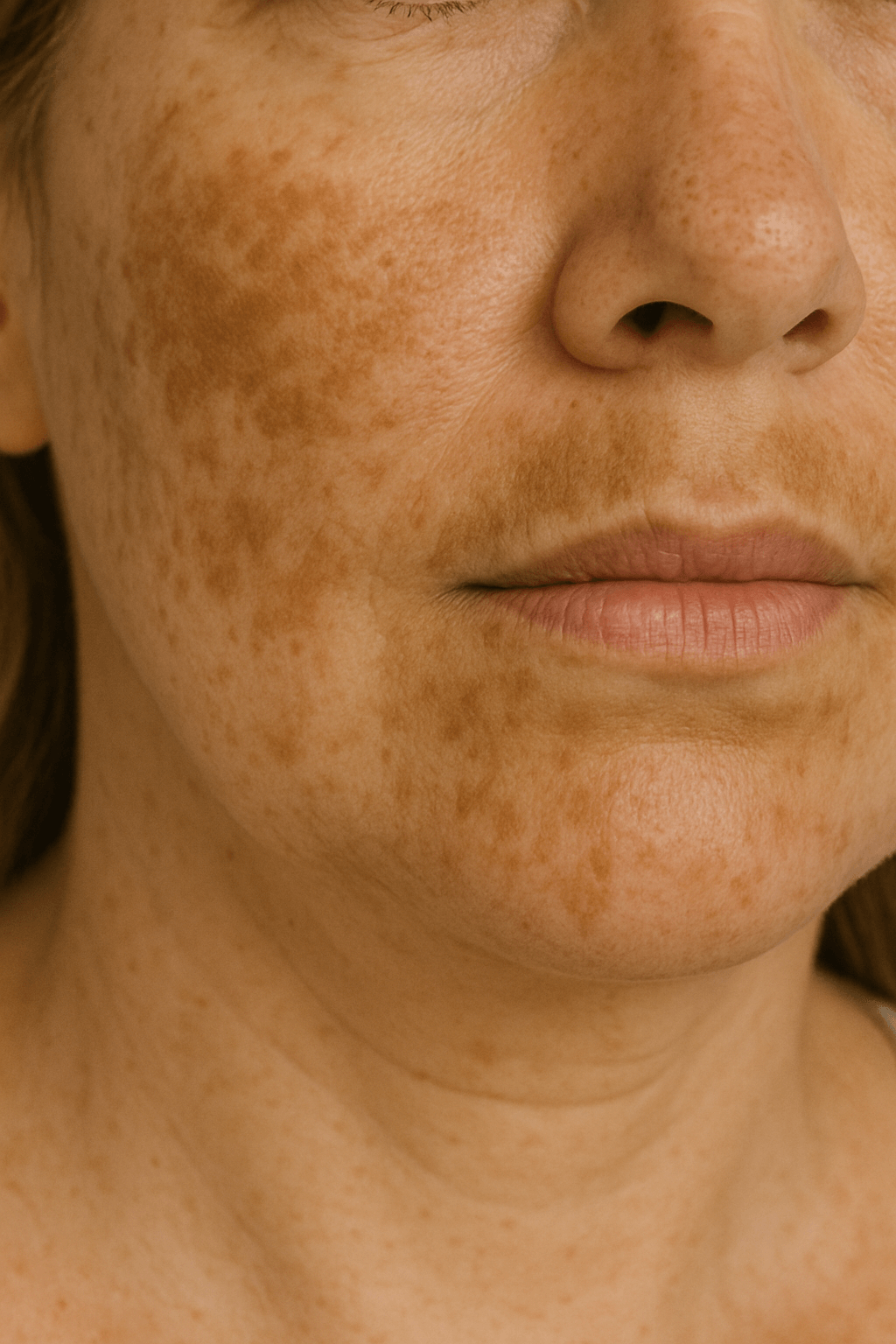
Chemical peels use acids like glycolic acid, salicylic acid, or trichloroacetic acid to exfoliate the skin’s surface, promoting the shedding of pigmented skin cells. They can improve the appearance of sunspots, age spots, and melasma, revealing brighter, more even-toned skin.
3. Laser Treatments
For more persistent or deep-seated hyperpigmentation, dermatologists may recommend laser treatments:
Fractional CO2 Lasers: These lasers target pigment deep in the skin, breaking up excess melanin and stimulating collagen production for smoother skin. They are effective for stubborn pigmentation and acne scars.
4. Sun Protection
An essential part of managing hyperpigmentation is consistent and rigorous sun protection. UV exposure can worsen hyperpigmentation and trigger new spots. Daily use of a broad-spectrum sunscreen with SPF 50 is critical for preventing further pigmentation and ensuring that treatments remain effective.
5. Preventive Measures
Lifestyle modifications, such as avoiding excessive sun exposure and protecting the skin from irritants, can help manage and prevent hyperpigmentation. For conditions like melasma, hormonal changes (such as pregnancy or birth control) may also need to be addressed.