

For many women, the first sign of menopause isn’t a missed period. It’s more of a feeling that something feels ‘off.’
Sleep becomes lighter and more fragmented. Anxiety creeps in where it never lived before. Concentration slips. Periods may still be arriving, but they’re less predictable. Sometimes when women seek help, they’re often told: “You’re not in menopause yet.”
Welcome to perimenopause: the hormonal transition that can begin years before periods stop altogether.
Menopause itself is defined as 12 months without a period. Perimenopause, however, is when hormones fluctuate unpredictably, causing symptoms despite ongoing cycles. This phase can last several years and is when some women feel their worst.
Blood tests are often requested, but in women over 40, hormone levels fluctuate so much that a “normal” result does not exclude perimenopause. Diagnosis is usually clinical, based on symptoms and age rather than a single lab value.
If you’re experiencing new symptoms in your 40s or early 50s and being told everything is “normal”, it’s worth reframing the question. The more useful one is not “Am I menopausal yet?” but “Could my symptoms be hormonally driven?”
This can be a really helpful way to help you and your doctor ascertain whether treatment is needed for perimenopausal symptoms, or whether you can find ways to cope with lifestyle adjustments or whether something else is going on. It’s always worth having that conversation.
More Tips from the Blog

Let’s Chat Rosacea
Rosacea Rosacea - if you’ve got it, you know the struggle. Redness, flushing, spots that look like acne but definitely aren’t, stinging skin, even gritty-feeling eyes. And in some advanced cases,...

Let’s Talk Menopause — What’s Actually Going On and Why It Matters
Menopause Menopause isn’t just the end of your periods. It’s a major life transition, and a great time to look after you. So What Is Menopause? Menopause happens when your ovaries stop producing...

Thinking About Injectables but Feeling Nervous? You’re Not Alone
Injectables Lately, you might have been thinking about trying injectables. Maybe smoothing a few lines, refreshing tired eyes, or adding a little volume. But if you’re anything like me when I first...

Why Are Peptides Vital in Our Skincare Routine?
Why Are Peptides Vital in Our Skincare Routine? Peptides are short chains of amino acids which are the building blocks of proteins. In skincare, peptides act as messengers that signal your skin to...
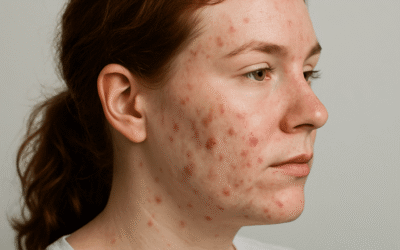
Tips for Managing Acne
Managing Acne Acne isn’t just a teenage problem. Many people, especially women, experience breakouts well into their 30s, 40s, and even during menopause. What Causes Acne? Acne forms when pores get...

Clearing the Bumps: Skincare Tips for Beating Pregnancy Acne
Pregnancy Acne & Skincare Hormonal fluctuations during pregnancy can lead to flare-ups of skin conditions like acne, rosacea, pigmentation, and periorificial dermatitis or even cause them to...