
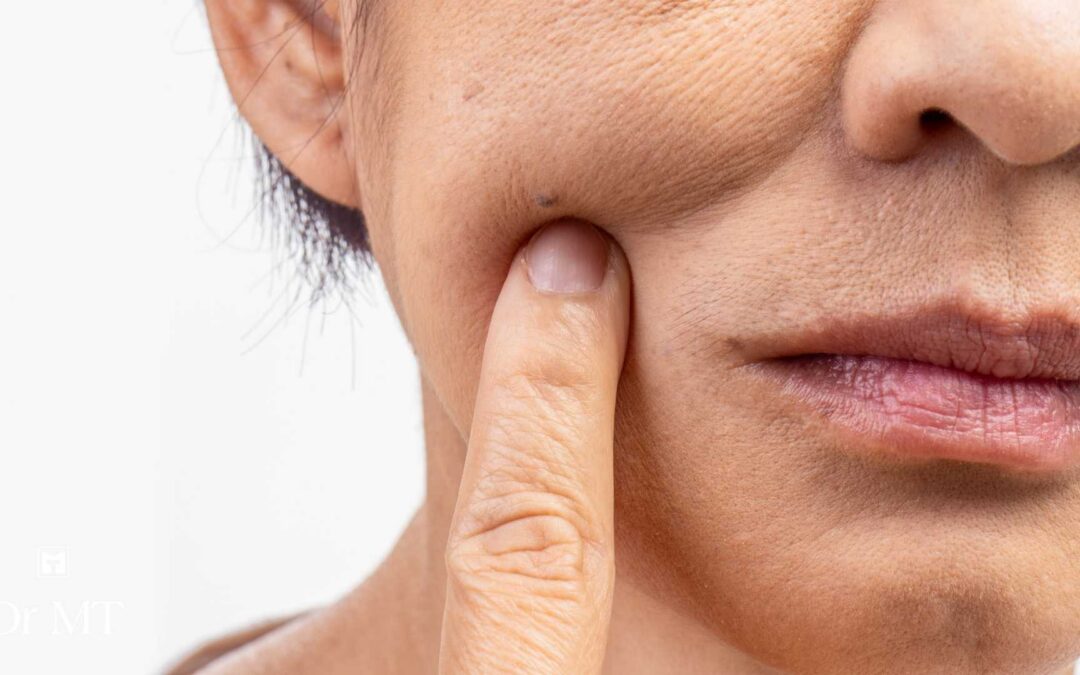
Many women notice changes in their skin around midlife that might at times feel abrupt and unfair.
Skin that once tolerated anything becomes reactive. Fine lines deepen seemingly overnight. The glow disappears. Makeup sits differently. Moisturiser no longer seems enough.
This isn’t vanity, it’s biology.
Oestrogen plays a key role in skin health. It supports collagen production, skin thickness, hydration, elasticity and barrier function. During perimenopause and menopause, oestrogen levels fluctuate and then decline, and the skin feels the effects.
Collagen loss accelerates. The skin barrier becomes less resilient. Transepidermal water loss increases, leading to dryness, tightness and irritation. Inflammatory skin conditions such as rosacea, eczema and perioral dermatitis often flare or appear for the first time.
This can be deeply unsettling, particularly when women are told to “just use a better moisturiser”.
While skincare alone can’t replace hormones, the right approach can support the skin through this transition.
Barrier repair becomes more important than aggressive treatments. Ingredients like ceramides, niacinamide and azelaic acid help calm inflammation and improve function. Prescription retinoids, when introduced carefully, can support collagen production and texture. Remember, timing and tolerance matter more than strength.
For some women, systemic HRT also improves skin quality indirectly by supporting hydration and elasticity from within. Others may not be candidates for HRT but can still see meaningful improvement with tailored skincare and in-clinic treatments.
Menopausal skin doesn’t need to be “fixed”. It needs to be understood, supported and treated with respect.
More Tips from the Blog

Hair thinning, shedding and menopause: what’s normal and what can be done?
Hair changes are one of the most distressing, and least talked about, aspects of menopause. Women describe increased shedding in the shower, a widening parting, loss of volume at the crown, or hair...

Am I in menopause or is this something else?
For many women, the first sign of menopause isn’t a missed period. It’s more of a feeling that something feels ‘off.’ Sleep becomes lighter and more fragmented. Anxiety creeps in where it never...

Is HRT safe? I’ve heard it causes breast cancer.
This is one of the most common, and understandable, questions women ask about menopause care. Much of the fear around HRT stems from headlines following the Women’s Health Initiative study in the...

“The Menopause” – Do I just have to put up with this?
Many women arrive at menopause care not asking for a cure but for permission to take their symptoms seriously. They’ve been told it’s “just part of ageing”. That they should cope better. That...

Why am I gaining weight when I’m doing everything ‘right?’
Few menopause concerns generate as much frustration as weight gain, especially when you’re doing everything you should to stay as healthy as possible. Hormonal changes during perimenopause and...

Who should I see about menopause?
Some women have excellent GP and medical support. Others are told menopause “isn’t really my area.” Which is ok as we can’t expect doctors to know everything about everything. But a referral pathway...