
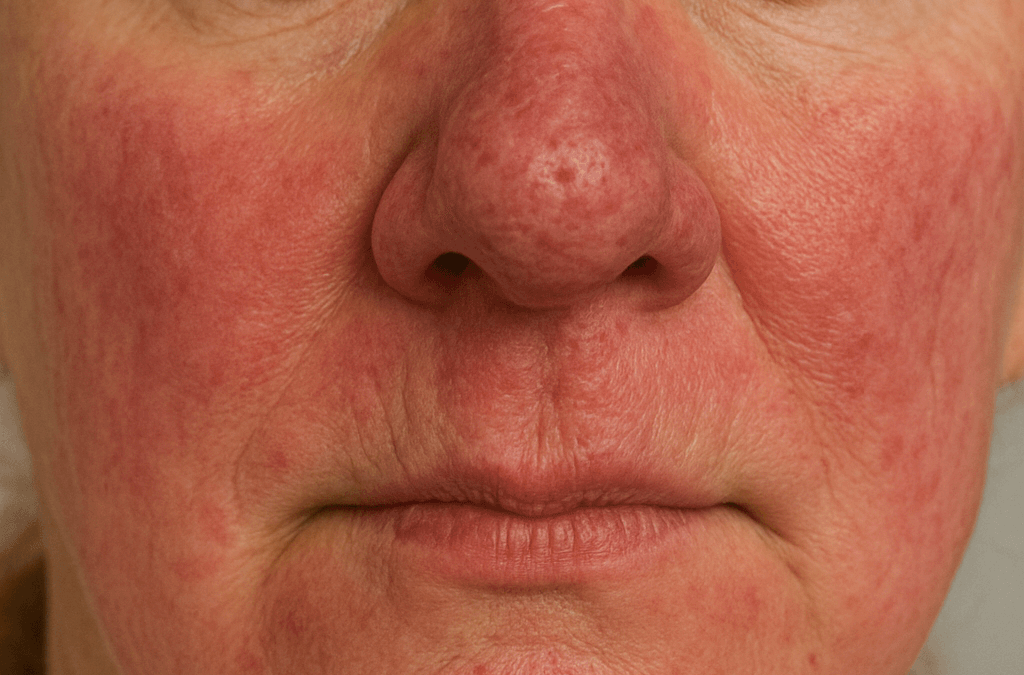
Rosacea
Rosacea – if you’ve got it, you know the struggle. Redness, flushing, spots that look like acne but definitely aren’t, stinging skin, even gritty-feeling eyes. And in some advanced cases, it can cause the nose to thicken. The earlier you catch and treat it, the better, otherwise that redness can become permanent.
It’s super common in Irish skin (some people call it “The Curse of the Celts”), and yes, it often runs in families. One of the culprits? A teeny tiny skin mite called demodex. We all have them on our skin, but people with rosacea tend to have more and their immune systems really don’t like them.
It’s often confused with acne but the treatments are different, so getting a proper diagnosis is key.
So, what helps?
First off: avoid your triggers. The big ones? Spicy food, alcohol, hot drinks (yes, coffee, sorry), and heat (think showers, saunas, sunny days).
Over-the-counter, a few things can calm things down:
- Sulfur: Great for calming inflammation.
- Azelaic Acid & Tranexamic Acid
- Gentle Cleanser: Don’t strip your skin or you’ll go even pinker
- Green-tinted Primer: Helps disguise the redness.
- Supplements: Zinc, omega-3s, and magnesium may support skin health from the inside out.
Prescription Options
If your rosacea’s a bit more stubborn, your doctor might suggest:
- Finacea or Skinoren: Prescription-strength azelaic acid.
- Soolantra: A topical treatment with ivermectin that targets inflammation (and those mites).
- Antibiotics: Sometimes a short course can help during flares.
- Brimonidine or oxymetazoline: Gels that reduce redness fast.
- Laser: Great for treating visible blood vessels (telangiectasia).
- Roaccutane: Used for severe cases.
- Surgery: Rarely needed, but helpful for rhinophyma.
Redness isn’t something you just have to put up with. With the right plan, your skin can calm down — and you don’t have to give up every glass of wine or coffee to get there.
Let me know if you want a personalised plan and book in for a skin consultation.
More Tips from the Blog

Treating Hair Loss in Men and Women: A Complete Guide
Hair loss and can be distressing regardless of age or gender. The good news is that a wide range of treatment options exist — from over-the-counter products and prescription medications to advanced in-clinic procedures. However, before starting any treatment, it’s vital to rule out underlying medical causes with a healthcare professional.

Finding the Right Aesthetic Doctor in Ireland for you
With the growing popularity of procedures like antiwrinkle treatments and dermal fillers, it’s essential to navigate the landscape carefully to stay safe.